
I have been caught up in the US midterm election results. With the incoming Democratic majority, I have seen the analysis turn to what Democrats should do to prove they can govern.
In the spirt of product-led thinking I think the answer is as simple as asking: what did the winning dem candidates promise, and what did voters say mattered valued?
When the the promises meet the expectations is where I see a form of “fit”. Given this I thought it would be an interesting product exercise to develop a roadmap around this fit.
This is a practical roadmap based on product thinking. It does ignore the political and tactical side of marshaling votes and navigating bills to law. However, I believe this product framework helps deliver on voter expectations.
Where is the fit?
I did a quick review of campaign material covering Democratic winners across Congress and Senate as of 12th November 2026. This covered 256 House winners and 21 Senators. This only covers Democratic candidates who were on the ballot in 2026, rather than the entire caucus.
Four themes stood out.
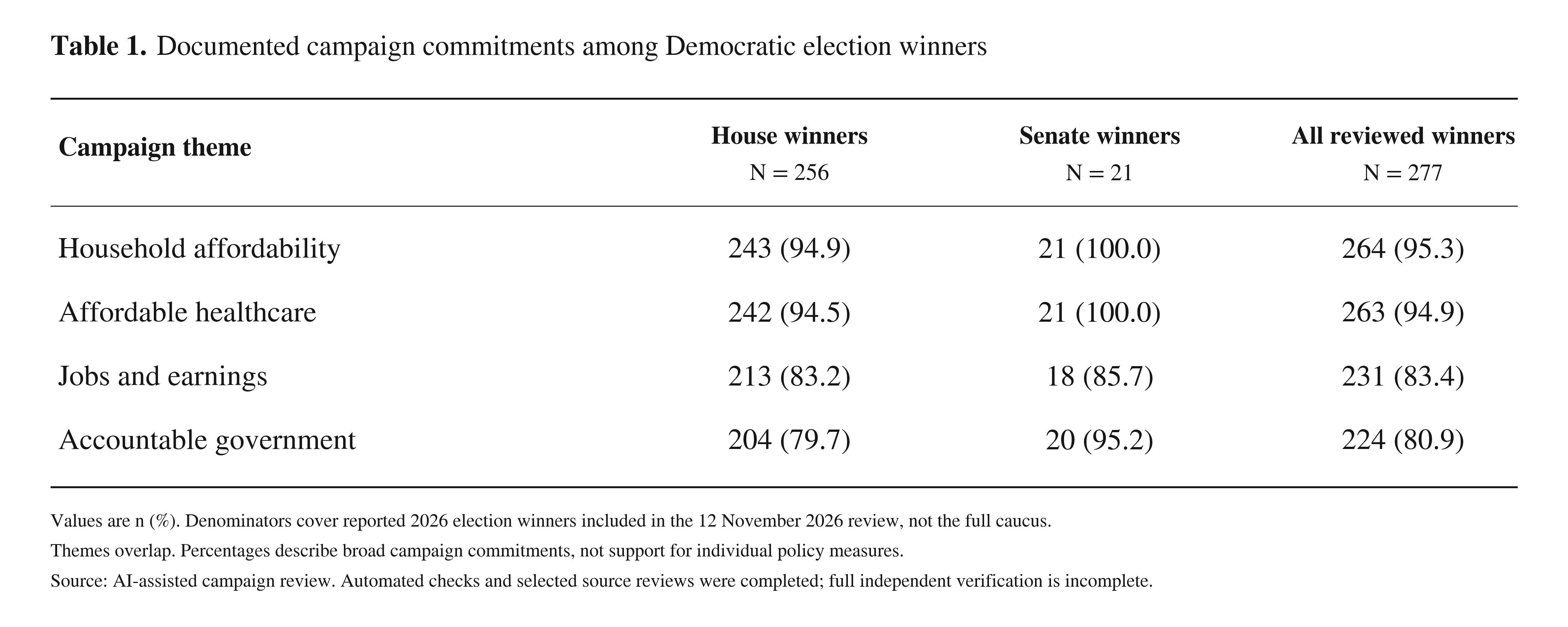
Household affordability and healthcare both cleared the 90% threshold I used to determine if any “near universal” commitments were made by the candidates in either house. Jobs and accountable government also featured high on promises made but did not meet that threshold in both chambers.
I then compared these themes to voter priorities. I pulled an Economist/YouGov poll taken in early November from 3,166 registered voters on their expectations for the next Congress.
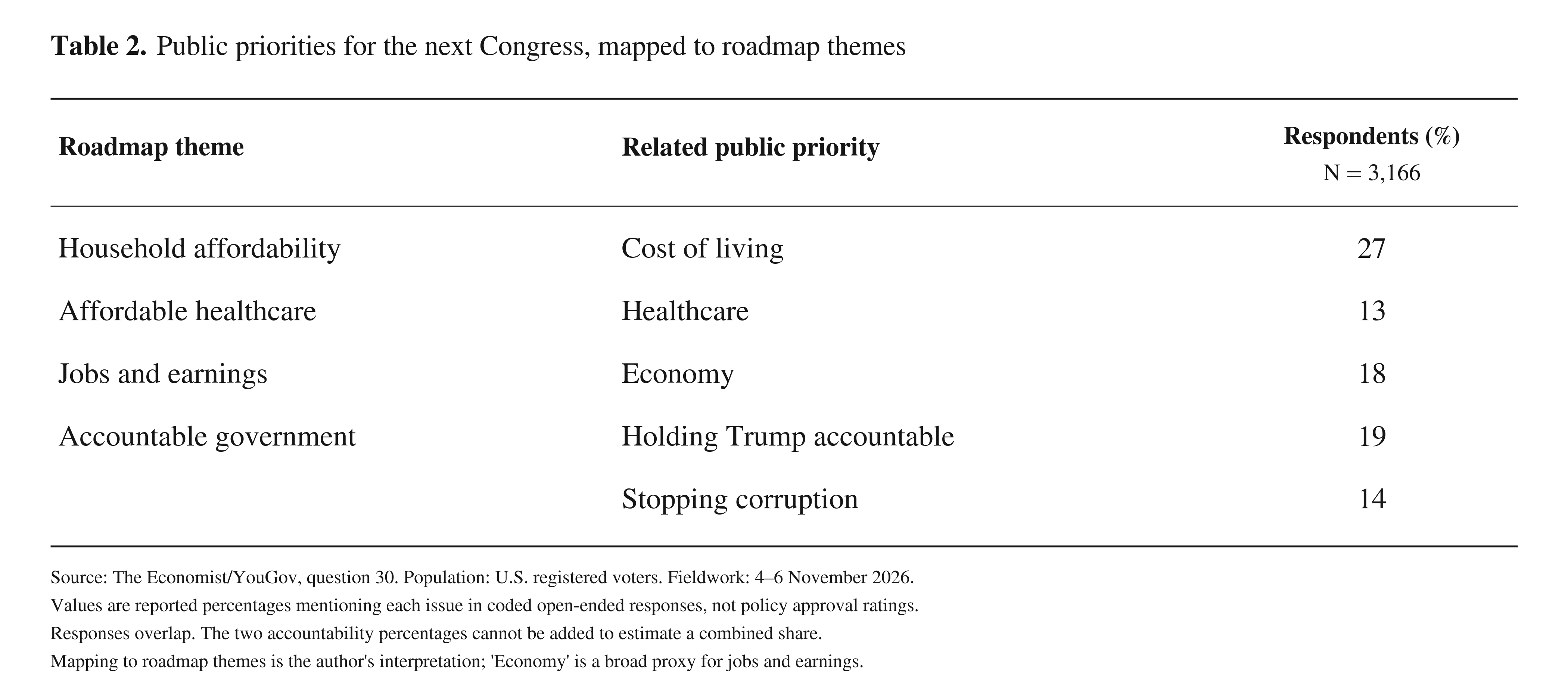
With this matching of priorities to promises, we have starting point of “fit” to identify which issues require solutions.
What could a 2027 roadmap look like?
We now have set of themes to build a clear roadmap for legislative priorities and focus. A roadmap is as much as a stakeholder management tool as anything, providing the caucus clear areas to focus and coordinate delivery of bills. Each theme could receive a few months of concentered effort to draft and pass bills, while ground-work begins on future themes.
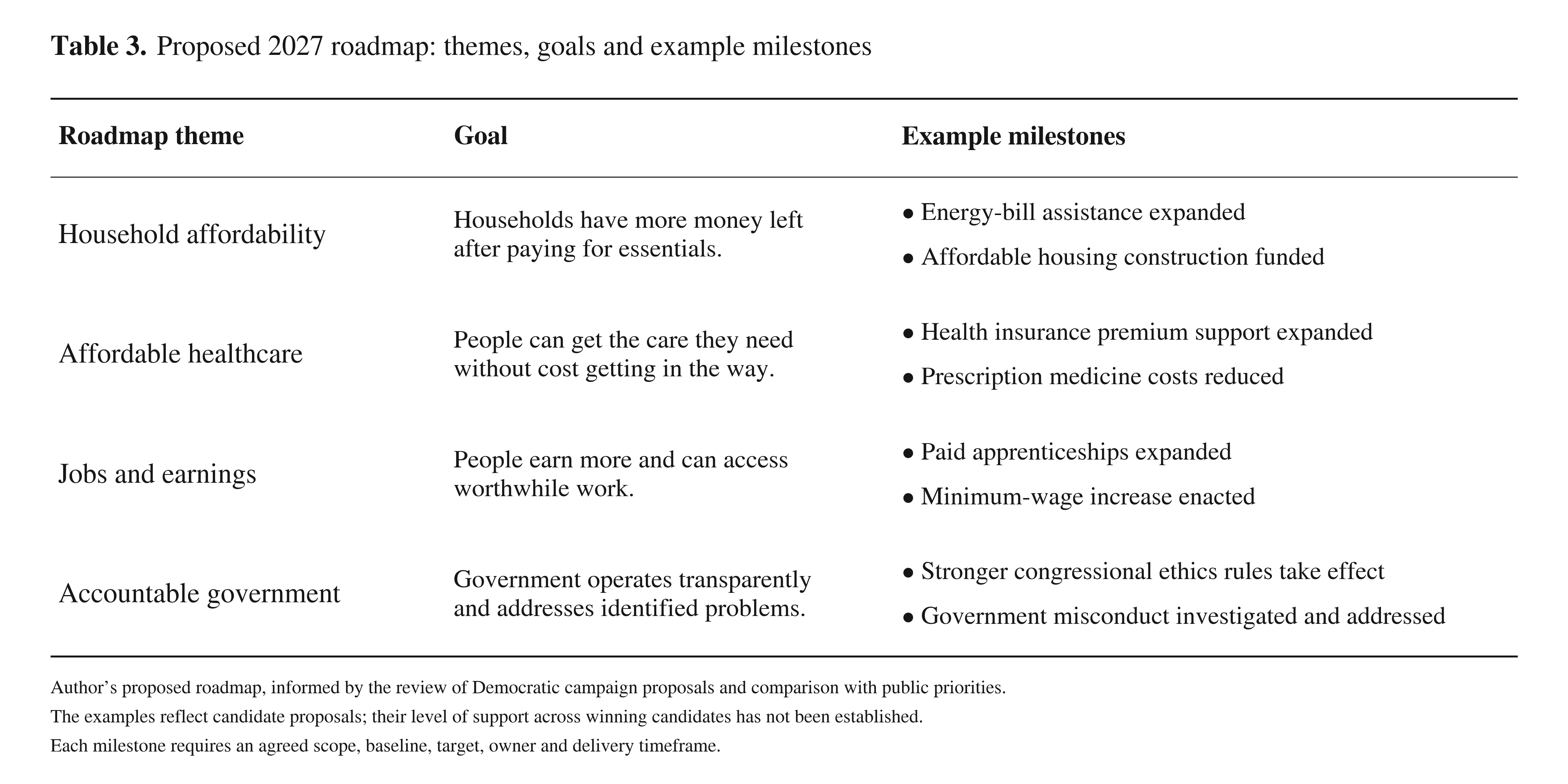
These proposed milestones are based on campaign proposals. Because candidates differ on the actual implementations of these policies, developing them passable legislation will require negotiations and tactical work. By establishing a shared framework, this grounded roadmap approach gives the caucus a starting point for those negotiations, keeping everyone focused on the timely delivery of bills to ensure people are better off.